
On this page
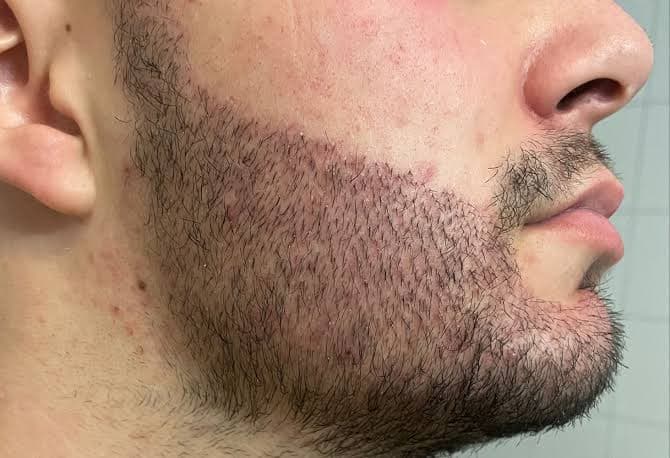
A beard defines the lines of the face and adds maturity to a man's appearance. But in many men the beard grows sparsely for genetic reasons, gaps remain on the cheeks or between the moustache and chin, or no hair grows in certain areas because of a scar, burn or acne marks. A beard transplant is the most effective way to fill these gaps permanently.
Technically, a beard transplant is similar to a hair transplant: follicles are usually taken from the back of the head and placed one by one into the beard area. But facial skin is much thinner than the scalp, and beard hairs leave the skin at a very shallow angle. A beard transplant therefore requires finer workmanship than a hair transplant.
Who is it suitable for?
A beard transplant is a good option for:
- A beard that is genetically sparse or patchy
- An undefined cheek line where a sharper beard border is wanted
- A moustache and chin beard that do not connect
- Thin sideburns
- Hairless areas caused by scars, burns, acne marks or previous surgery
- Completing a previous beard transplant
A beard transplant requires a sufficient, healthy donor area at the back of the head. For patients who have lost beard hair because of patchy hair loss (alopecia areata), it must first be confirmed that the condition is not active. These cases are discussed separately during the preliminary assessment.
How is the beard line designed?
The most important element of a good beard transplant is a beard line that suits the face. A sharp cheek line set too high looks artificial; a line that sits too low can make the face look rounder than it is. The design takes into account:
- The shape of your face and jaw
- The direction and density of your existing beard
- Your hair colour and the colour of your beard hair
- How you want to wear your beard: short, medium or long
The line is drawn together with you in front of a mirror on surgery day. Bringing photos of how you like to wear your beard helps us understand your expectations.
How is the procedure done?
- Examination and design: The beard line and areas to be treated are defined.
- Local anaesthesia: The donor area and beard area are numbed.
- Harvesting: Follicles are extracted one by one from the back of the head using FUE. Mostly single and double-hair grafts are chosen for the beard, as they look closer to beard hair.
- Implantation: Follicles are placed with the Choi pen used in the DHI technique or through very fine channels. Each one is set according to the direction and very shallow exit angle of the existing beard hair.
Direction changes constantly in the beard area: on the cheeks hairs grow downwards, under the chin forwards and sideways, and in the moustache outwards. Staying true to these changes is the key to a natural result.
After the procedure
For the first few days after a beard transplant, mild swelling and redness of the face are possible. The small scabs around the grafts fall away within 5–7 days. During this period, you need to wash your face as advised, avoid rubbing the area and protect it from the sun.
- No creams, lotions or make-up on the face during the first week.
- No sauna, swimming pool or intense exercise for the first 2–3 weeks.
- The transplanted beard can first be trimmed with scissors after about 10 days, and shaved with clippers or a razor usually after one month.
As with a hair transplant, some transplanted hairs fall out between weeks 2 and 4. New hairs begin to appear around month 3 and the result becomes clear within 6–9 months. Our hair transplant aftercare page is also a useful guide to general care.
How will the transplanted beard look?
Because the transplanted hairs come from the back of the head, they may be slightly finer and softer than your beard hair at first. Over time they adapt to the beard area, and as they are cut and grown it becomes hard to notice any difference. The transplanted beard is permanent for life and can be shaved, grown and styled.
Frequently asked questions
Does a beard transplant leave scars?
The implantation points on the face are tiny and are not visible once healed. No linear scar is left in the donor area either.
Can a beard and hair transplant be done on the same day?
If donor capacity allows, yes. But the total graft count and protection of the donor area must be assessed together.
When can I shave the transplanted beard?
Trimming with scissors is possible after about 10 days; shaving with clippers or a razor usually after one month.
Is the result permanent?
Yes. Transplanted follicles carry the hair-loss resistance of the back of the head and are permanent.
The information on this page is for general guidance only; diagnosis and treatment decisions are made by a physician after examination. Results vary from person to person.