On this page
One of the most common reasons people postpone a hair transplant is not wanting to be seen with a shaved head in the weeks after surgery. This matters a great deal for people who deal with others face to face at work, for managers, and for men and women with longer hair. The unshaven hair transplant was developed as an answer to this concern.
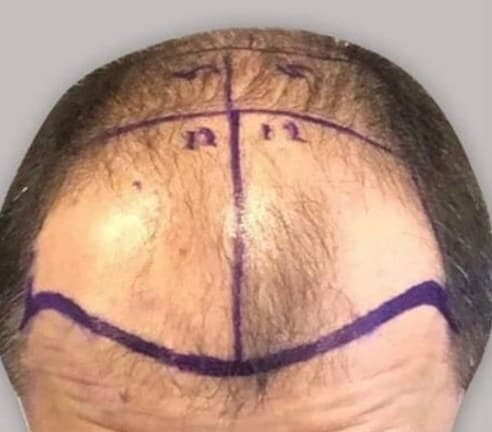
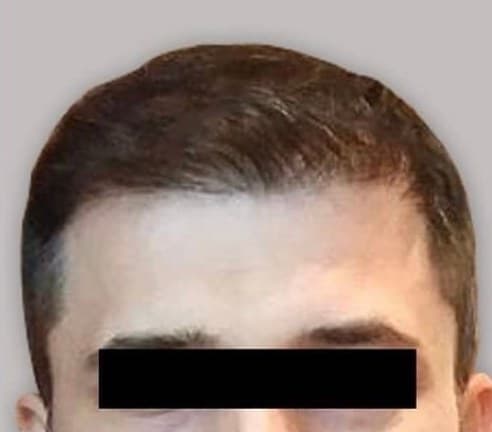
In an unshaven transplant, the hair in the recipient area is not cut. In the donor area, rather than shaving everything, a hidden strip that can be covered by the hair above it is trimmed, or follicles are taken one by one from between longer hairs. As a result, when you leave the clinic on surgery day, your haircut looks largely the same.
How is an unshaven transplant done?
An unshaven transplant has two main stages, and both take more time and care than a standard transplant.
Hidden harvesting in the donor area
At the back of the head, a horizontal strip that is revealed when the upper hair is lifted is trimmed short. Follicles are harvested from this strip. After surgery, when the upper hair falls back down, the strip is completely covered. In some cases follicles are selected one by one from among long hairs without any trimming at all; this takes longer and suits smaller graft numbers.
Implantation with DHI
When implanting between existing hairs, the DHI technique is used. The Choi pen reaches the skin between the hair shafts and releases each follicle, with channel creation and placement in a single motion. Because channels are not opened in advance, there is less risk of damaging existing hair.
Who is it suitable for?
An unshaven transplant is not for everyone. It works best when:
- The area to be treated is limited (the hairline, temples or densifying a specific zone)
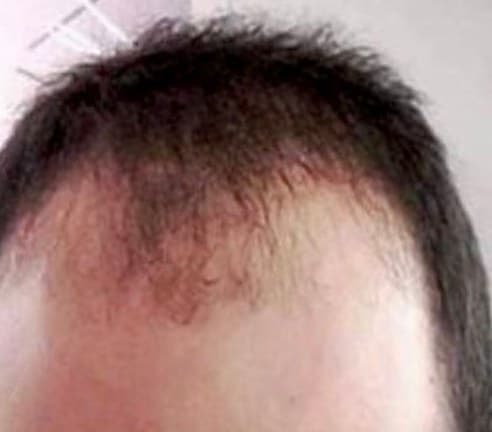
- There is still some existing hair in the recipient area, i.e. the area is not completely bald
- The patient's hair is at least a few centimetres long
- Women need hairline or parting work
- A previous transplant needs minor correction
For very large, completely bald areas and cases that need a high graft count, an unshaven transplant is generally not recommended. In those cases, working on a shaved area faster and more densely gives a better result. During the preliminary assessment we explain the pros and cons of both options clearly.
Advantages
- A discreet look: Your haircut is largely preserved and the operation is not easy to spot.
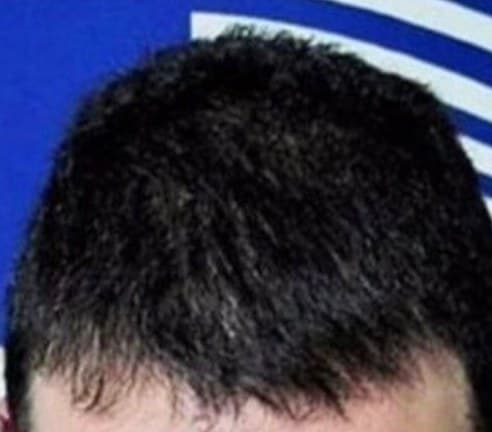
- Quick social return: Scabs stay hidden among existing hair, so they are less visible; most patients return to daily life within a few days.
- Harmony with existing hair: Because implantation is done while seeing the length and direction of your hair, it is easier to plan how the new hair will sit.
- Suitable for women: For women with long hair, not shaving is often a non-negotiable condition.
Limits
An unshaven transplant is technically more demanding. Working among long hair slows every stage, so fewer grafts can be placed in the same time. Implanting between existing hairs also requires great care. For these reasons, unshaven transplants should be reserved for limited, well-planned cases.
For some patients, an in-between option called a "partial shave" is possible: only the donor area is trimmed and the recipient area is left unshaven. We decide together which option is right for you after reviewing your photos and examining you.
Preparing for surgery
If an unshaven transplant is planned, you are advised not to cut your hair for a few weeks beforehand. The upper hair needs to be a certain length to hide the donor strip. We also ask you to postpone treatments such as hair dye or keratin for a while before surgery. For general preparation steps, see our before your hair transplant page.
Recovery
Recovery after an unshaven transplant follows the same timeline as a standard transplant. The first wash takes place the next day and scabs fall away within 7–10 days, during which time existing hair covers most of them. From the second week, it is normal for some transplanted hairs to shed; new hair begins to grow around month 3 and the final look develops by month 12. See our hair transplant aftercare page for details.
Frequently asked questions
Is no hair cut at all in an unshaven transplant?
In most cases a hidden strip is trimmed in the donor area. The recipient area is not cut. In very limited cases, a transplant without any trimming is possible.
How many grafts can be placed with an unshaven transplant?
Fewer grafts than in a standard transplant, because the procedure takes longer. The approximate number depends on the size of the area and your hair characteristics.
Is an unshaven transplant suitable for women?
Yes, it is often preferred for hairline and parting work in women. The cause of hair loss should be investigated first, however.
Are the results the same as a shaved transplant?
In the right case, results are similar. The difference lies in the number of grafts possible and the length of the procedure.
The information on this page is for general guidance only; diagnosis and treatment decisions are made by a physician after examination. Results vary from person to person.