On this page
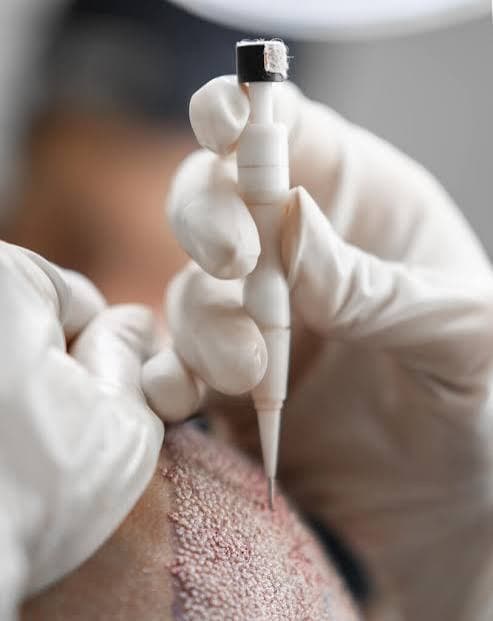
DHI (Direct Hair Implantation) is a hair transplant technique in which follicles harvested with the FUE method are placed into the recipient area using a special instrument called the Choi implanter pen. In classic methods, hundreds or even thousands of micro-channels are opened in the recipient area first, and the follicles are then placed into them with forceps. With DHI, opening the channel and releasing the follicle happen at the same time, in a single motion.
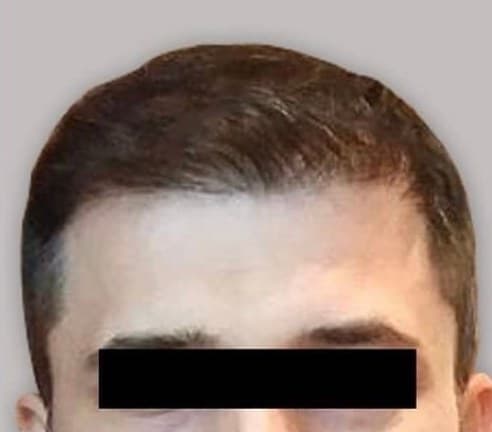
The difference may seem small, but it shows in the result in many ways. Each follicle is released at the desired angle and depth, following the direction of the surrounding hair. In areas where imperfections are most visible, such as the hairline, this control decides whether the result looks "transplanted" or simply looks like your own hair.
How does the Choi implanter pen work?
The Choi pen is a pen-shaped instrument with a fine hollow needle at its tip. A harvested follicle is loaded into this needle. The surgeon or an experienced team member inserts the pen into the skin at the planned angle; the needle creates a channel just large enough for the follicle, and a plunger mechanism releases the follicle into it. When the pen is withdrawn, the follicle stays in place.
Pens come with different needle diameters. Finer tips are used for thin single-hair grafts and slightly wider tips for two- or three-hair grafts. During surgery, several pens are loaded in rotation so that the time each follicle spends outside the body stays short.
Advantages of DHI
- High directional control: Each follicle is placed according to the exit direction of the hair around it. This matters especially at the temples and in the curves of the hairline.
- Protection of existing hair: Because channels are not opened in advance, there is less risk of damaging healthy hair in thinning areas. This is why DHI is often chosen for densifying between existing hair.
- Suitable for unshaven transplants: Implantation can be done without shaving the recipient area. In suitable cases, this means a much faster return to social life.
- Shorter time outside the body: Follicles can be implanted soon after they are harvested.
- Less bleeding and quick healing: The channels in the recipient area are very small, so redness in the first days is usually more limited.
Limits of DHI
DHI is not the best option for every case. The technique demands a high level of attention and experience; because every follicle is loaded and placed individually, it is slower than Sapphire FUE. For very large bald areas, where a high graft count is needed in a single session, we may recommend a combined plan rather than DHI alone.
With very curly or very coarse hair, loading follicles into the pen can also be more difficult. In such cases, the placement technique is decided together at the examination. To compare DHI and Sapphire FUE in detail, read our FUE vs DHI guide.
Who is it suitable for?
DHI stands out particularly for:
- Redesigning or lowering the frontal hairline
- Closing receding temples
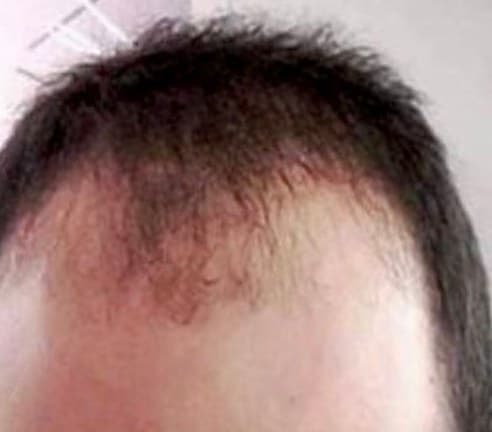
- Densifying thinning areas that are not completely bald
- Patients who do not want to shave and are candidates for an unshaven transplant
- Revision and correction of previous transplants
- Hairline and parting work in women
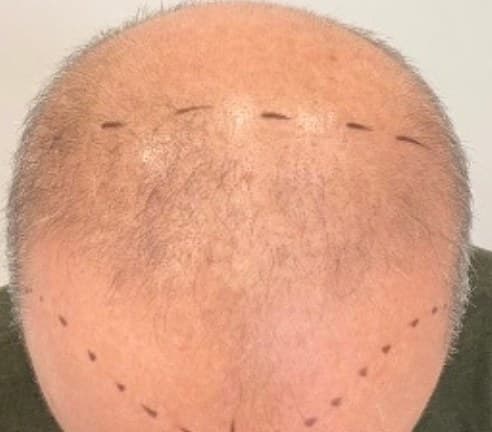
In advanced hair loss such as Norwood 5–7, DHI can be used for the front line and combined with Sapphire FUE for the areas behind it.
Surgery day step by step
- Examination and blood tests: We check your general health and whether anything prevents surgery.
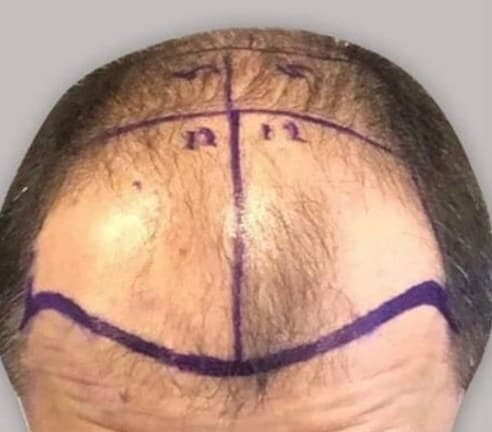
- Hairline design: The line is drawn together with you, taking into account facial proportions, age and how hair loss may progress.
- Local anaesthesia: The donor and recipient areas are numbed. Apart from a slight sting in the first minutes, you will not feel pain.
- Harvesting: Follicles are extracted one by one with a micro-motor and sorted by hair count.
- Pen implantation: Follicles are loaded into Choi pens and implanted at the planned angle and direction.
- Dressing and instructions: The donor area is bandaged, and you receive your medication and care instructions.
Recovery after DHI
In the first days after DHI, small scabs form in the recipient area. The first wash usually takes place at the clinic the next day; with daily washing the scabs fall away within 7–10 days. Mild swelling on the forehead may appear for 2–4 days and resolves on its own.
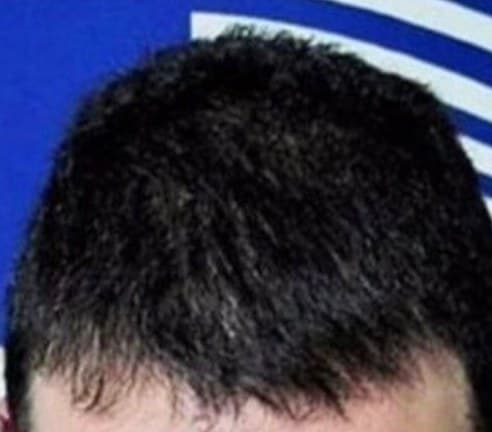
From the second week, some of the transplanted hairs fall out. This shock loss is normal and the follicles stay in place. New hair usually starts to grow in month 3, a clear difference is visible by month 6 and the final look develops around month 12. For all aftercare steps, see our hair transplant aftercare page.
Frequently asked questions
Is DHI better than FUE?
Neither is definitively better; they serve different needs. DHI has the edge in precision and densification, Sapphire FUE in high graft counts over large areas. The right choice depends on your case.
How many grafts can be implanted with DHI?
The number of grafts possible in one session depends on donor capacity and procedure time. We can give you an approximate range from your photos.
Do I need to shave my head for DHI?
In suitable cases, implantation can be done without shaving the recipient area. The donor area usually needs trimming, which can be hidden under the hair above it.
Is DHI painful?
The procedure is performed under local anaesthesia. Mild tightness and tenderness afterwards is managed with the recommended painkillers.
The information on this page is for general guidance only; diagnosis and treatment decisions are made by a physician after examination. Results vary from person to person.