On this page
A hair transplant is a surgical procedure in which healthy hair follicles are taken from the back and sides of the head and placed one by one into areas where hair has thinned or been lost. It sounds simple, but a good result depends on detailed planning: how many follicles to harvest, at what density to place them in each zone, where and with what curve the hairline should run, and how to make sure the donor area still looks natural in the years ahead.
On this page we explain how hair transplantation works, which techniques are used, who makes a good candidate and what to expect in the year after surgery. Our goal is to help you ask the right questions before you decide.
How does a hair transplant work?
The main cause of male-pattern hair loss is a genetic sensitivity of hair follicles to a hormone called dihydrotestosterone (DHT). This sensitivity is strongest at the frontal hairline, the mid-scalp and the crown. Follicles at the back and sides of the head are resistant to DHT, which is why even older men with advanced hair loss keep hair in these areas.
A hair transplant uses this difference. Resistant follicles are harvested in their natural groupings, called follicular units (groups of one, two, three or four hairs), and moved to the thinning area. Transplanted follicles keep the characteristics of the area they came from. In other words, the transplanted hair shows the same resistance to hair loss and grows, can be cut and can be styled like normal hair.
What you should keep in mind is that native hair in untreated areas may continue to thin. A good plan therefore looks not only at today's hair loss but also at the shape it may take in the coming years.
Which techniques are used?
Today, follicles are harvested using FUE (Follicular Unit Extraction), meaning one by one with fine micro-motor punches. Unlike the old FUT (strip) method, no strip of skin is removed from the back of the head and no long linear scar is left. The real difference between techniques lies in how the follicles are placed into the recipient area.
DHI (Choi pen)
In a DHI hair transplant, follicles are implanted with the Choi implanter pen so that channel creation and placement happen in a single motion. Control over angle, direction and depth is high. It is ideal for the hairline, temples and densifying between existing hair.
Sapphire FUE
In Sapphire FUE, micro-channels are first opened with sapphire blades and the follicles are then placed into them. The smooth surface of the sapphire tip causes less trauma to the tissue. It is efficient for reaching high graft numbers in one session over large bald areas.
Unshaven hair transplant
In an unshaven transplant, the hair is not fully shaved. In suitable cases, only a hidden strip in the donor area is trimmed, or hairs are cut individually. It suits people who want to return to social life quickly, but it is not suitable for every case.
In some patients the two techniques are combined: the front line with DHI, the areas behind it with Sapphire FUE. The right combination for you is decided during the examination.
Who is a good candidate?
The single most important factor is the donor area. Having enough thick hair at the back and sides makes it easier to plan both today's surgery and a possible second session later. Alongside this, we assess:
- The type and stage of hair loss (using the Norwood scale)
- Age and family history of hair loss
- Hair thickness, colour and curl
- General health, medications and chronic conditions
- Whether expectations are realistic
In women, hair loss is usually diffuse thinning, and the cause has to be investigated first. See our female hair transplant page for details.
A hair transplant does not stop hair loss that is still actively progressing. For young patients losing hair quickly, it is important to discuss treatments that slow hair loss before or alongside the transplant.
What happens on surgery day?
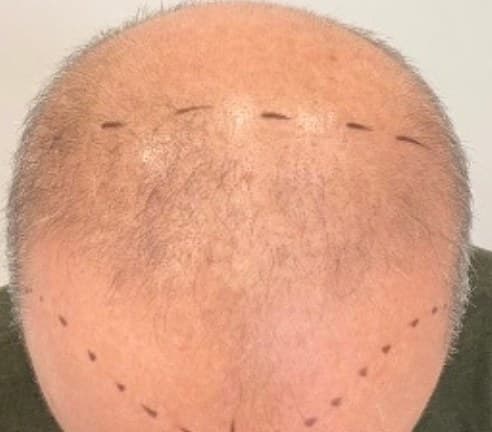
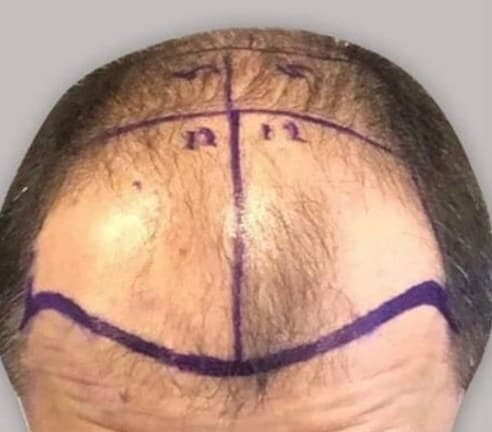
Surgery day begins with blood tests and an examination. The hairline is then drawn together with you, based on your facial proportions and age; this is the time to share your opinion freely. The donor area is trimmed, local anaesthesia is applied and the follicles are harvested one by one.
The harvested follicles are sorted under magnification according to hair count and kept in a suitable solution until placement. After a lunch break, implantation begins. Single-hair grafts go at the very front of the hairline and multi-hair grafts go into the rows behind it where volume is needed. The procedure usually takes 6–8 hours and you return to your hotel the same day. For a step-by-step view, read our hair transplant stages page.
Recovery and results timeline
Seeing the result of a hair transplant takes patience. A general timeline looks like this:
- First 3 days: Mild swelling and tightness are possible. The first wash takes place the next day.
- Days 7–10: Scabs fall away with regular washing and redness fades.
- Weeks 2–8: Some of the transplanted hairs fall out (shock loss). This is normal.
- Months 3–4: New hair starts to grow as fine strands.
- Month 6: A clear change is visible.
- Months 12–18: Hair thickens and the final look develops.
Correct care during this period matters a great deal. Details on washing, sleep, exercise and sun exposure are on our hair transplant aftercare page.
Frequently asked questions
Does a hair transplant leave a scar?
With FUE, follicles are harvested with punches 0.6–0.9 mm in diameter, so no linear scar is left. The healed points in the donor area are not noticeable unless the hair is cut extremely short.
How many grafts will I need?
The graft count depends on the size of the area, the target density and your donor capacity. We can give you an approximate range from your photos; the exact number is decided at the examination. See our guide how many grafts do I need for more.
When can I go back to work?
For desk jobs, most patients return to work within 2–5 days. Jobs that involve physical effort may require a longer break.
Could I need a second transplant?
In advanced hair loss, or where hair loss continues, a second session may be needed years later. This is why protecting the donor area in the first operation is so important.
The information on this page is for general guidance only; diagnosis and treatment decisions are made by a physician after examination. Results vary from person to person.