On this page
PRP (Platelet-Rich Plasma) is a plasma product prepared from the patient's own blood, with an increased concentration of platelets. Platelets are the cells that help blood to clot, but they also contain growth factors involved in tissue repair. PRP treatment aims to concentrate these growth factors close to the hair follicles.
PRP hair treatment is a non-surgical procedure widely used in dermatology and hair health. Because it is prepared from your own blood, the risk of an allergic reaction is very low. But PRP is not a miracle: its effect varies from person to person, and the best results come in the right patient with regular sessions.
How is PRP prepared and applied?
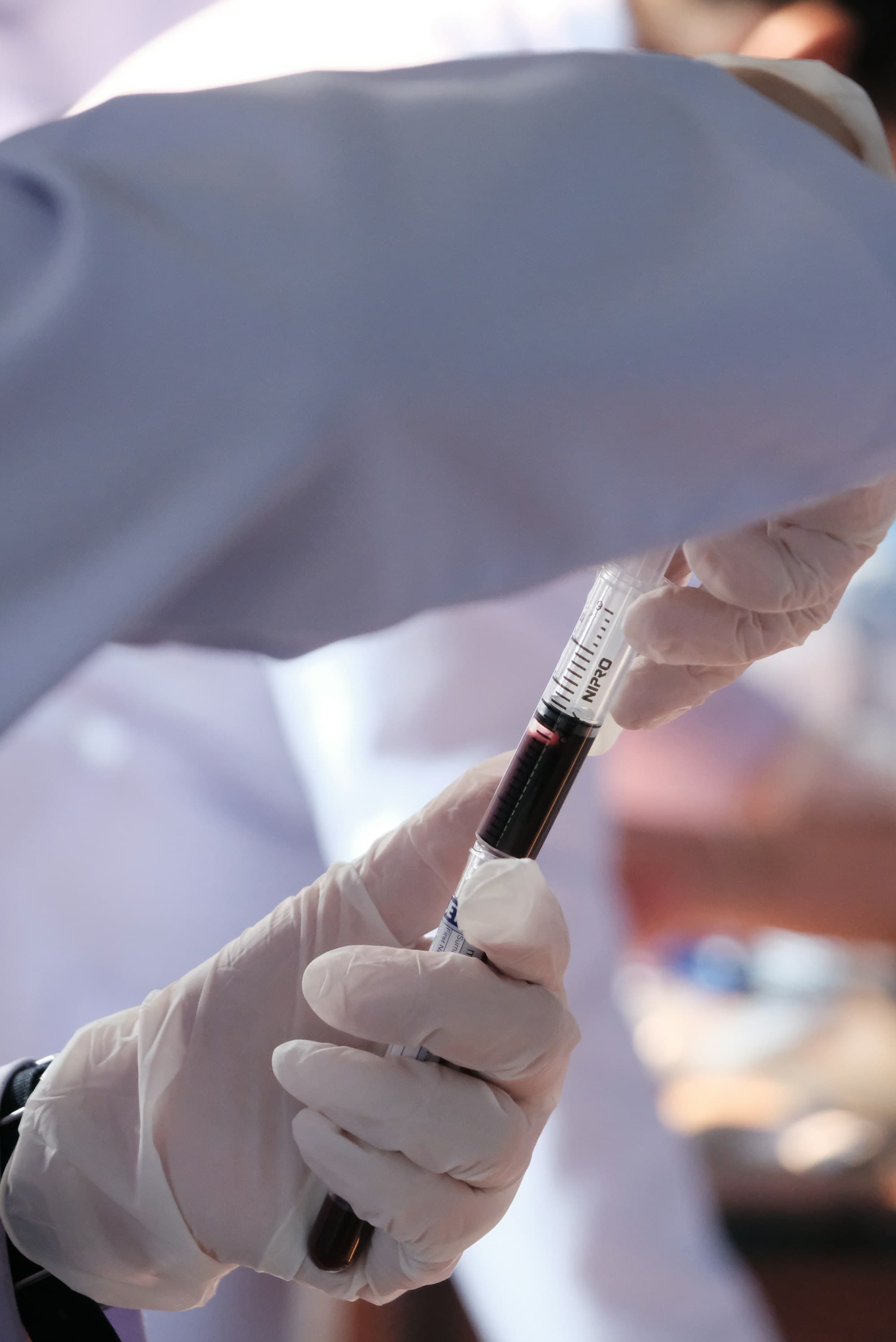
- Blood draw: A small amount of blood is taken from the arm, just like a standard blood test.
- Centrifuge: The blood is placed in special tubes in a centrifuge, which separates it into its components; the platelet-rich plasma layer is extracted.
- Preparation: The scalp is cleaned. A numbing cream can be applied for sensitive patients.
- Application: The prepared plasma is delivered into thinning areas through micro-injections with very fine needles.
The whole procedure usually takes 30–45 minutes, and you can return to your daily routine straight away.
Who is it suitable for?
PRP is particularly useful for:
- Early and intermediate male-pattern hair loss
- Female-pattern diffuse thinning
- Thinning hair shafts and declining hair quality
- Support before and after a hair transplant
- As a supportive measure in temporary hair loss linked to stress, illness or hormonal change
PRP does not create new hair in completely bald areas where follicles no longer exist. It works on follicles that are still present but weakened, which is why the earlier treatment begins, the greater the expected benefit.
PRP is not recommended in some situations: blood clotting disorders, a low platelet count, active infection, certain blood diseases and during cancer treatment. It is not given during pregnancy or breastfeeding. Your medical history is therefore always reviewed before treatment.
PRP alongside a hair transplant
PRP can also be used as support during the hair transplant process. The aim of PRP after a transplant is to contribute to healing and to support the quality of the surrounding native hair. The timing of post-transplant sessions is planned according to how healing progresses. For the overall process, see our hair transplant aftercare page.
Number of sessions and schedule
PRP is usually given as a course. A common protocol is an initial course of 3–4 sessions, 3–4 weeks apart. Maintenance sessions every 4–6 months may then be recommended to sustain the effect. The number and spacing of sessions are personalised according to your type of hair loss and how you respond to treatment.
When will I see results?
The effect of PRP is not immediate. Because of the natural hair growth cycle, it usually takes 3–6 months for a change to become noticeable. The first changes people tend to notice are less shedding and thicker hair shafts. Results vary between individuals: some patients see a clear effect, others a more limited one.
Side effects
PRP is generally well tolerated. After the procedure, mild redness, tenderness and small swellings may appear at the injection points; these usually settle within a day. Small bruises can occasionally occur. You are advised not to wash your hair on the day of the session and to avoid saunas and swimming pools.
It makes more sense to consider PRP not on its own but, where appropriate, together with mesotherapy and medical treatment recommended by a physician. To understand the cause of your hair loss, see our what is hair loss page.
Frequently asked questions
Is PRP painful?
Because very fine needles are used, you may feel a slight sting. A numbing cream can be applied for sensitive patients.
Does PRP stop hair loss completely?
PRP can help slow hair loss and improve hair quality, but on its own it does not completely stop genetic hair loss.
Can I go back to work after PRP?
Yes. Most patients return to work the same day.
What is the difference between PRP and mesotherapy?
PRP is prepared from your own blood; mesotherapy uses ready-made mixtures containing vitamins, minerals and amino acids.
The information on this page is for general guidance only; diagnosis and treatment decisions are made by a physician after examination. Results vary from person to person.