On this page
Hair follicles need nutrients carried by the bloodstream in order to grow and renew. An unbalanced diet, stress, hormonal changes, smoking and certain illnesses can reduce the supply of these nutrients to the follicles. As a result, hair shafts become thinner and more brittle, and shedding increases.
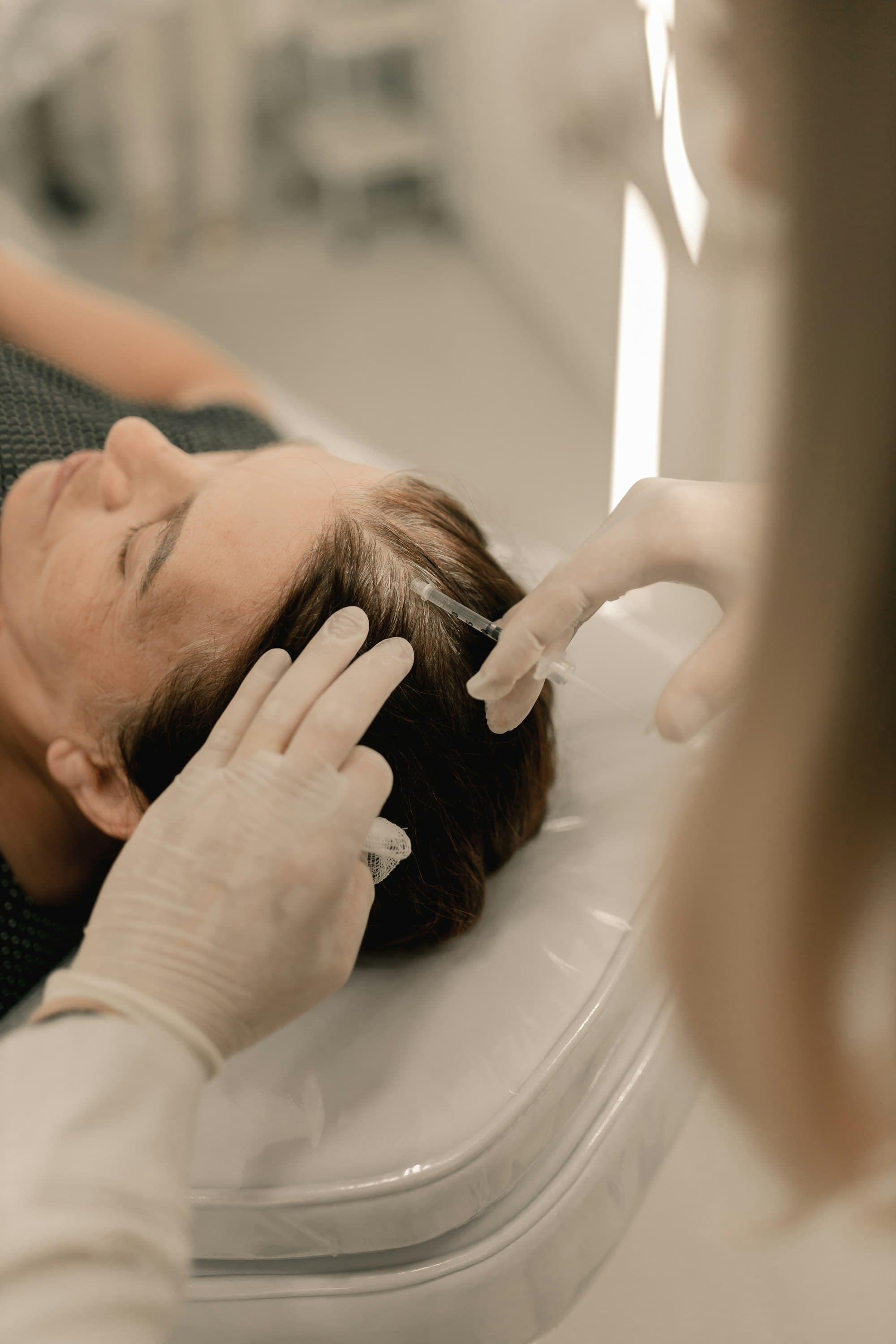
Hair mesotherapy delivers some of the vitamins, minerals, amino acids and other supportive substances that follicles need directly into the scalp through micro-injections. Unlike supplements taken by mouth, the ingredients are delivered straight to the treatment area.
What does a mesotherapy mixture contain?
Mesotherapy mixtures vary according to the patient's needs and the physician's assessment. Commonly used ingredients include:
- Vitamins: Biotin (B7), panthenol (B5), B-complex vitamins, vitamins C and E
- Minerals: Trace elements such as zinc, copper and selenium
- Amino acids: Such as cysteine and methionine, which play a role in producing keratin, the building block of hair
- Hyaluronic acid: Supports scalp hydration and elasticity
- Coenzymes and antioxidants
The mixture to be used is decided after assessing the type of hair loss and the condition of the scalp.
How is it applied?
- Assessment: We discuss the type, duration and possible causes of your hair loss. Blood tests are requested if needed.
- Preparation: The scalp is cleaned and disinfected. A numbing cream can be used for sensitive patients.
- Application: The mixture is delivered in small doses into the superficial layer of the scalp over thinning areas, using very fine needles or a special mesotherapy injector.
A session usually lasts 20–30 minutes, and you can return to your daily routine immediately afterwards.
Who is it suitable for?
Hair mesotherapy is recommended as a supportive treatment for:
- Seasonal or stress-related increases in shedding
- Thinning, dull and brittle hair
- Early-stage male and female-pattern hair loss
- Hair loss after childbirth or dieting
- Supporting the scalp before and after a hair transplant
Mesotherapy does not grow new hair in completely bald areas. It is aimed at supporting follicles that are still present but weakened. If there is a significant thyroid condition, iron deficiency or hormonal disorder, that cause needs to be treated alongside mesotherapy; otherwise its effect will be limited.
Mesotherapy is not given during pregnancy or breastfeeding, in the presence of active scalp infection, to people allergic to any ingredient in the mixture, or in some chronic conditions.
Number of sessions and schedule
Mesotherapy is given as a course. A common protocol is an initial course of 4–6 sessions, weekly or every two weeks. Maintenance sessions monthly or every few months may then be planned to sustain the effect. The exact protocol depends on your type of hair loss and how you respond to treatment.
When will I see results?
The effect of mesotherapy builds gradually. Most patients notice less shedding and livelier-looking hair as the first change within 2–3 months. Thicker hair shafts and increased density can take longer. Results vary from person to person.
Mesotherapy or PRP?
Both methods aim to support hair follicles, but they work differently. PRP uses growth factors obtained from your own blood; mesotherapy uses prepared nutrient mixtures. In some patients the two are planned in alternation. Which suits you better is decided after assessing the cause and type of your hair loss.
Side effects
Mesotherapy is generally well tolerated. After the procedure, mild redness, tenderness and small bumps may appear at the injection points; these usually settle within a few hours to a day. Small bruises can occasionally occur. On the day of treatment you are advised not to wash your hair and to avoid saunas and swimming pools.
To better understand the possible causes of hair loss, read our what is hair loss page, and for the stages of thinning in women, our Ludwig scale page.
Frequently asked questions
Is mesotherapy painful?
Because very fine needles are used, most people feel only a slight sting. A numbing cream can be applied if you prefer.
When can I wash my hair after mesotherapy?
You can usually wash it the next day.
Can mesotherapy replace a hair transplant?
No. Mesotherapy supports existing follicles; it does not grow new hair in bald areas. Those areas require a transplant.
Is it the same for men and women?
The method of application is the same; the mixture and session plan are tailored to each person's needs.
The information on this page is for general guidance only; diagnosis and treatment decisions are made by a physician after examination. Results vary from person to person.